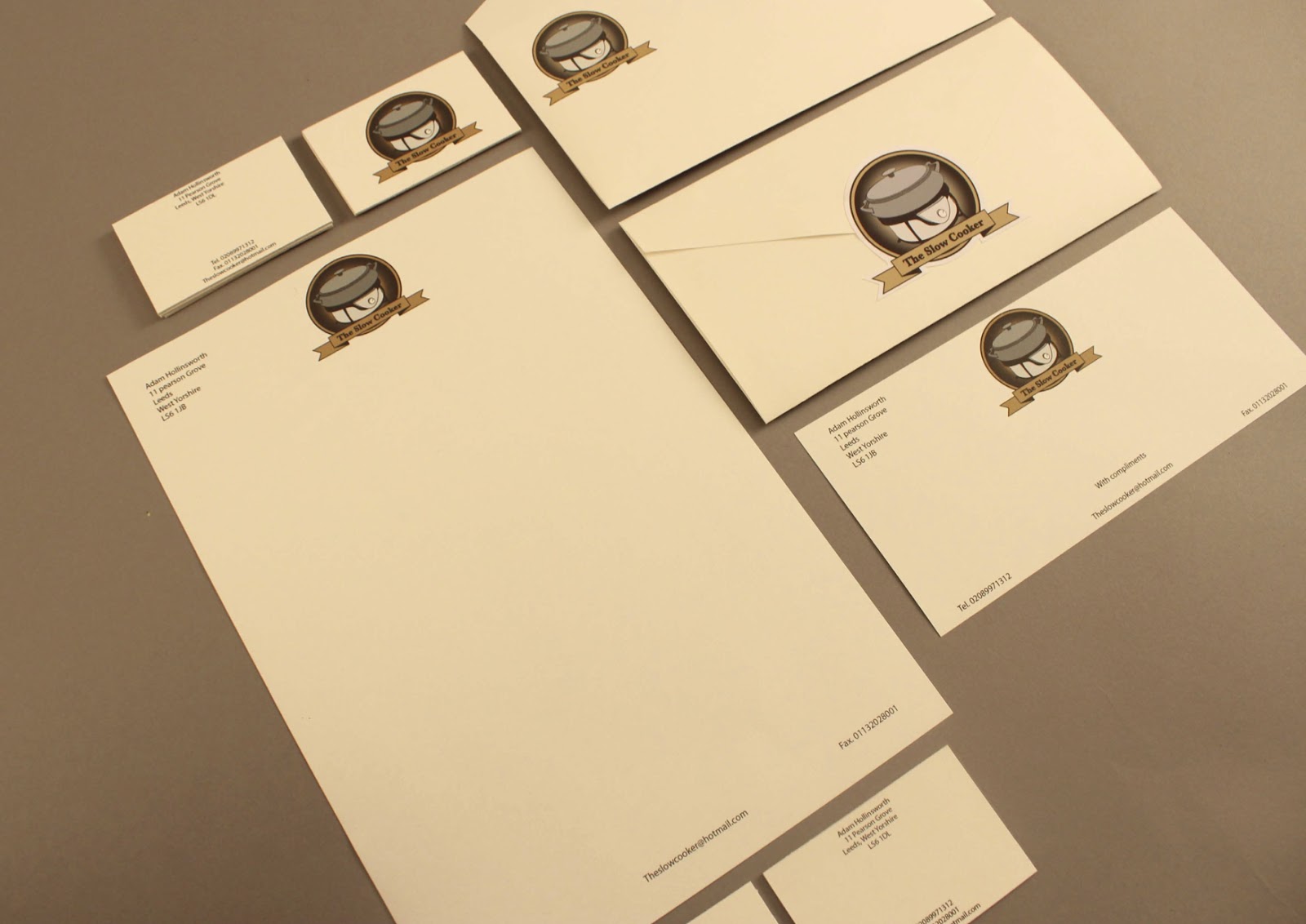
I am really happy with the stationary range, here are the final outcomes.


End of module self –evaluation.
I have really enjoyed working on the resubmission of this work especially ‘Speaking from experience’. Going back and revisiting these brief has reminded me how much I enjoy the subject of Graphic Design. I feel my skills have developed through these briefs and have helped me to apply my designs to a range of different applications throughout the projects especially the ‘Speaking of experience’ brief.
I have researched many different areas for this resubmission and found some parts of my research more relevant and practical than other parts. Specifically when thinking about focusing on the final outcomes. I looked at things that I felt were interesting as well as relevant to the briefs. My research was very helpful in assisting me with the completion of these projects and I found that my research greatly helped my idea generation and thought process.
My research about the Pomodorra technique will also be extremely valuable in the future, as time management hasn’t really been a strength of mine this year. I feel that this technique is very helpful and will enable me to finally deal with my problem of managing my time efficiently. If this technique can help me then I’m sure that it can help anyone.
My strengths can be seen throughout the module resubmission but I feel they are specifically noticed in the ‘Speaking from experience’ final outcomes. I have thoroughly enjoyed producing different forms of packaging for this brief and it has reminded me how much I enjoy designing and making packaging.
I am also very pleased with the photos I have used for the ‘Type’ brief and this has also reminded me of how much I really enjoy photography. I have used ‘InDesign’ throughout these projects and I am really happy with the progression I am making in relation to using the program. I have found it very useful when designing my calendar and posters.
I will now build upon these skills and put them into practice when approaching future projects.
I wish I had been able to further develop ‘Speaking from experience’ by using resources in the digital print room and the screen print equipment to transfer designs onto the final pieces. However I’m very happy with what I have produced with the limited resources that were available to me.
Five things that I can identify and will do differently next time are:
1. I will not waste any time by not attending crits, tutorials or studio time. This has greatly hindered the development of my projects and consequently has led to me having to resubmit these modules.
2. Staying on top of blogging. This is essential, as blogging regularly will leave me time to focus on other parts of my work.
3. Put more effort in when researching. Research is a vital part of any brief and I need to remember this as it affects my final outcomes.
4. To stay enthusiastic and motivated about all briefs. This will help me not to loose interest or momentum when I feel I’m not fully understanding or engaging a brief.
5. To get the most out of every brief. Even If I am not enjoying a brief that doesn’t mean I cant improvise and adapt to achieve whatever the brief is asking. I can take the opportunity of not enjoying the specifics of a brief to teach my self new skills or develop on the ones I have already.


http://en.wikipedia.org/wiki/Opposite_(semantics)
In lexical semantics, oppositesare words that lie in an inherently incompatible binary relationship as in the opposite pairs male : female, long : short, up : down, and precede : follow. The notion of incompatibility here refers to the fact that one word in an opposite pair entails that it is not the other pair member. For example, something that is longentails that it is not short. It is referred to as a 'binary' relationship because there are two members in a set of opposites. The relationship between opposites is known asopposition. A member of a pair of opposites can generally be determined by the questionWhat is the opposite of X ?
The term antonym (and the related antonymy) has also been commonly used as a term that is synonymous withopposite; however, the term also has other more restricted meanings. One usage hasantonym referring to both gradable opposites, such aslong : short, and (non-gradable) complementary opposites, such as male : female, while opposites of the types up : down andprecede : follow are excluded from the definition.
A third usage (particularly that of the influential Lyons 1968, 1977) defines the term antonymas referring to only gradable opposites (the long : short type) while the other types are referred to with different terms. Therefore, as Crystal (2003) warns, the terms antonymy andantonym should be regarded with care. In this article, the usage of Lyons (1963, 1977) and Cruse (1986, 2004) will be followed where antonym is restricted to gradable opposites and opposite is used as the general term referring to any of the subtypes discussed below.
While objectal opposites are difficult to define it is generally accepted that the disappearance of an object is the closet rather than the lack of physical presence.


